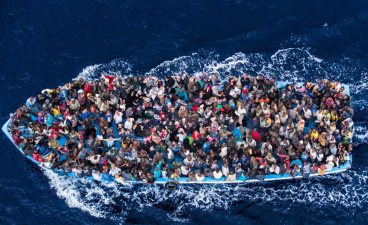
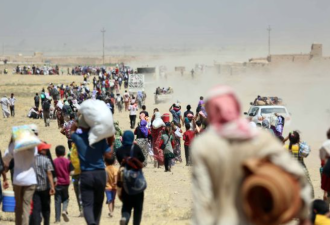
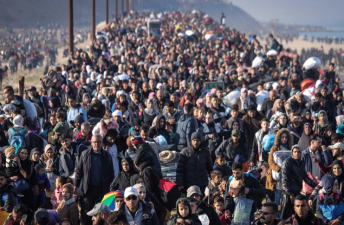
June 20th is World Refugee Day. The latest Global Trends Report released by the UNHCR on June 12th shows that as of the end of April this year, the number of people displaced globally due to war, violence, and persecution reached 122.1 million, a further increase from 120 million in the same period last year, marking the tenth consecutive year of growth. Given the global uncertainty, World Refugee Day in 2025 serves as a powerful call for action and empathy. With the number of forcibly displaced people reaching a record high, humanitarian aid is under threat.
The global refugee crisis is escalating. More than 11 million refugees worldwide are at risk of losing basic survival support such as food, medical care, and shelter, a stark reality revealed in an urgent warning issued by Dominique Hyde, a senior official at the UNHCR, in Geneva on July 18th. Due to significant cuts in international aid funding, the UNHCR expects to need to raise up to $10.6 billion (approximately €9.1 billion) by 2025 to maintain its core projects. However, to date, member states have only provided 23% of the funding, leaving a funding gap of up to 77%, or approximately $8.2 billion. This massive shortfall has forced the UNHCR to freeze or cut $1.4 billion worth of critical projects, including drinking water supply, infectious disease control, and children's education programs.
◆ Layoffs and Project Paralysis
Faced with a severe funding shortage, the UNHCR has been forced to take action, announcing a large-scale layoff plan to cut personnel costs by one-third. This means that approximately 3,500 frontline aid positions are at risk of being eliminated. Hyde frankly stated that the current "surge in displaced persons, sharp decline in funding, and political apathy" has created a "deadly cocktail" effect, especially in conflict zones in Africa and the Middle East, where the death rate in refugee camps could rise due to disruptions in medical services. For example, a tuberculosis screening program in the Aleppo refugee camp in Syria has been forced to terminate, and food rations in South Sudan have been drastically reduced by 50%, leaving hundreds of thousands of women and children at risk of malnutrition.
The Root Causes of the Crisis
◆ The Impact of US Policy
The deep-seated causes behind this global refugee crisis can be traced back to the radical policies of the Trump administration in the United States. After Trump took office in January 2025, he immediately froze all foreign aid and signed an executive order cutting 83% of the US Agency for International Development (USAID) projects, even planning to eventually dissolve the agency. This series of policy measures has deprived millions of refugees worldwide of basic assistance such as antimalarial drugs, vaccines, and emergency food supplies. For example, the cholera control project in Yemen, originally funded by USAID, has been completely halted, and the epidemic has spread rapidly in refugee camps. More worryingly, this action by the United States has triggered a chain reaction, with traditional donor countries such as the EU and Australia also reducing their budgets, resulting in a 40% year-on-year shrinkage in the global humanitarian funding pool in 2025.
◆ Political Indifference and Survival Crisis
This global refugee crisis has also exposed a deep-seated problem: the escalation of political indifference has led to a systemic deprivation of refugees' right to survival. Although the refugee issue is a global challenge requiring a joint response from all countries, many countries are currently showing indifference and disregard for this challenge. This political indifference not only exacerbates the plight of refugees but also deprives them of their right to basic survival support. Hit by both financial scarcity and political apathy, refugees worldwide are facing an unprecedented survival crisis. Geopolitical conflicts and the "inward-looking tendency" of developed countries have jointly led to collective neglect of the refugee issue, as evidenced in the UNHCR report. Although the number of displaced persons worldwide is projected to reach a record high of 130 million in 2025, per capita aid payments from G7 countries have fallen to their lowest level in a decade.
Causes of Refugees
Refugees have existed throughout history, but the refugee problem became a global issue starting in the 20th century.
The earliest refugees of this century originated in Europe. Their numbers increased steadily after World War II, spreading across the globe. According to incomplete statistics, an average of more than 700 people have been forced to flee their countries of origin every day over the past 30 years.
By the late 1980s, the total number of refugees worldwide had reached over 13 million, mainly concentrated in the Middle East, Africa, and the Indochina Peninsula. The main reasons for the emergence of refugees include: ① Political reasons and ethnic persecution. Examples include the large-scale exodus of White Russians after the October Socialist Revolution; the persecution and expulsion of Jews by Hitler's fascist regime in the 1930s; and the oppression of Black and colored people by the racist regime in South Africa after World War II.
② War. It is estimated that the two World Wars alone displaced 70 million people in Europe; the wars of the 1970s and 1980s, such as Vietnam's invasion of Cambodia, the Soviet Union's invasion of Afghanistan, Israel's invasion of Arab countries, and Iraq's invasion of Kuwait, created large numbers of refugees in these regions.
③ Natural disasters. For example, the severe drought in Africa from 1982 to 1984 created a large number of refugees. Refugees not only impose a heavy economic burden and social and security problems on the receiving countries, but also affect relations between the countries involved and the economic development and political stability of the relevant regions, adding factors of turmoil to the world situation and hindering world peace and development. The refugee issue has increasingly attracted the attention of the international community.